4 politico News
Secretary of State Marco Rubio announced this week his intention to declare the so-called Cártel de los Soles a foreign terrorist organization, ratcheting up the Trump administration’s pressure campaign against Venezuela.
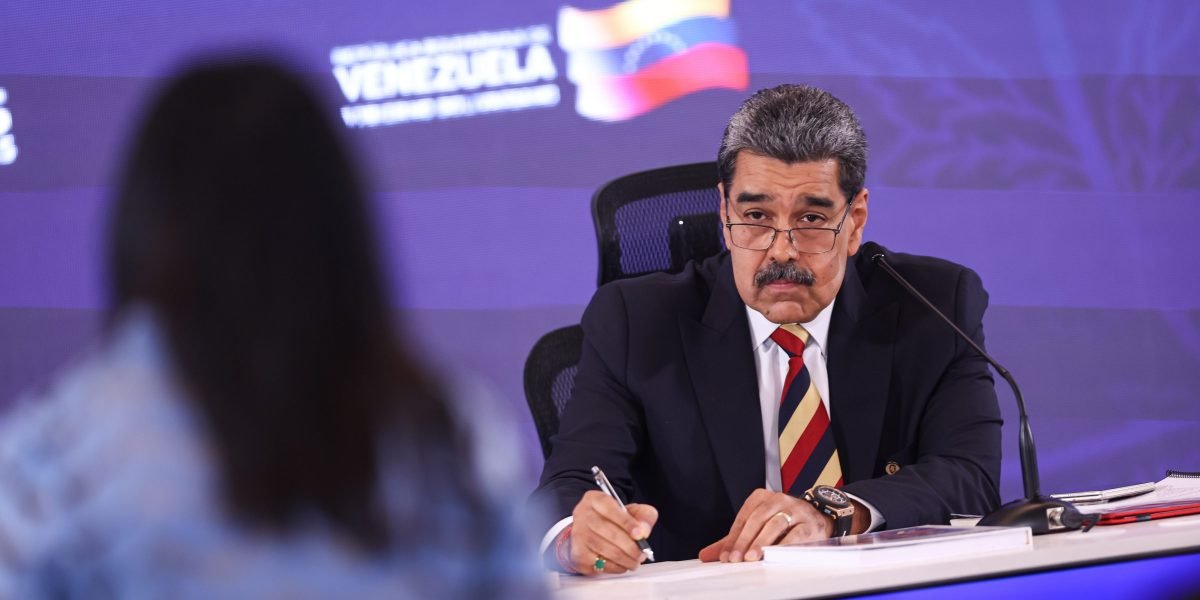
In a statement Sunday, Rubio described an organized cabal of Venezuelan military officers and politicians working hand in glove with drug traffickers to oversee the shipment of massive quantities of cocaine to American shores, all overseen and managed by President Nicolás Maduro.
“Based in Venezuela, the Cartel de los Soles is headed by Nicolás Maduro and other high-ranking individuals of the illegitimate Maduro regime who have corrupted Venezuela’s military, intelligence, legislature, and judiciary,” Rubio said.
The announcement came months after the Treasury Department issued its own sanctions against the group, known in English as the Cartel of the Suns, which it accused in July of “using the flood of illegal narcotics as a weapon against the United States.”
It’s a troubling image: a state captured by ideologically motivated drug lords hell-bent on the destruction of the American way of life.
Rubio’s push to label Maduro and his allies as terrorists, though, is just the latest escalation in the Trump administration’s fusion of America’s two forever wars: the war on drugs and the war on terror.
Since February, the State Department has slapped the foreign terror organization label on more nearly a dozen street gangs and drug-trafficking networks across Latin America, and Trump has used the highly fungible phrase “narcoterrorists” to justify a series of dubiously legal strikes on boats off the coast of Venezuela.
There’s just one giant problem: There is little evidence that Cartel of the Suns exists. The organized communist plot to poison Americans with drugs doesn’t remotely resemble the reality of Venezuelan corruption or the country’s drug trade.
“The idea that this is a narcoterrorist cartel, and that Maduro is directing the traffic and sending drugs and dangerous criminals to the U.S. to undermine the U.S. government — that’s really wide of the mark,” said Phil Gunson, a Caracas-based analyst with the International Crisis Group.
“The war on drugs is not really about drugs.”
To critics of American drug policy abroad, the move against Cartel of the Suns is the latest display of how the U.S. uses anti-drug policies as a smokescreen to bully its neighbors.
“The war on drugs is not really about drugs,” said Alexander Aviña, a professor of Latin American history at Arizona State University. “It’s a way of extending the U.S.’s geopolitical interests and a way to hit at governments deemed to be antithetical to imperial designs.”
How Corruption Works
References to the Cártel de los Soles date back to the 1990s, when local reporters used the term to refer to a handful of generals in the Venezuelan National Guard accused of collusion in the drug trade, according to Gunson, who has lived and worked in the country since 1999.
A former journalist, Gunson also happens to be a co-author of a 2005 Miami Herald article that appears to be one of the earliest English-language reports to use the name.
“It was kind of a jokey label,” said Gunson. “The press started calling it ‘Cártel de los Soles’ because of the sun insignias on their epaulets.”
Like many countries around the world, corruption runs rampant in Venezuela.
“It’s pretty well known and accepted in Venezuela that the government has been collaborating with drug traffickers and other criminal organizations in the country,” said José De Bastos, a Venezuelan journalist based in Washington.
That corruption took on a new intensity during the reign of Maduro, who was elected in 2013 as the handpicked successor to Hugo Chavez, the left-wing populist whose 15-year rule transformed the country. When falling oil prices, capital flight, and U.S. sanctions tanked the economy, however, government involvement with criminal rackets emerged as a form of patronage, revenue, and control.
“Since before the beginning of Chavismo there’s been corruption in the military — accepting bribes and allowing criminal groups to move in certain areas,” De Bastos said. “Basically the government needed other sources of income, and illicit activities gained importance. It’s not just drug trafficking. It’s minerals, it’s oil, you know, a lot of things are moved illicitly.”
Rubio and other officials’ notion of a unified government-cartel conspiracy that can be sanctioned, however, is a far cry from the way these interactions function. A 2022 report by the research outlet Insight Crime describes a “fluid and loose knit network of trafficking cells embedded within the Venezuelan security forces, facilitated, protected, and sometimes directed by political actors.”
“The government plays a key role,” De Bastos said, “but it’s more like a patchwork of networks that take advantage of having the government as an ally in their illicit activities.”
Gunning for Maduro
The effort by the U.S. to position Maduro as Venezuela’s drug lord-in-chief began in earnest during Trump’s first term in office when, in 2020, federal prosecutors in the Southern District of New York unveiled an indictment naming Maduro as the leader of the Cartel of the Suns.
One of the prosecutors on that team was Emil Bove, a right-wing Trump loyalist who, before becoming a federal judge in September, served as the acting deputy attorney general. During his recent stint at the Justice Department, Bove said he was uninterested in arresting drug traffickers, urging the U.S. to instead “just sink the boats,” according to a report by NPR.
Maduro has denied any connection to drug trafficking and has cited United Nations data showing that only a tiny fraction of the global cocaine supply passes through Venezuela.
Venezuela has never been a major producer of cocaine, the majority of which is grown and produced in Colombia, Ecuador, and Peru. Nor does Venezuela rank as a particularly significant transshipment point for the drug, about 74 percent of which is estimated to make its way north through smuggling routes in the Pacific, according to one Drug Enforcement Administration report.
By the mid-2000s, after Chavez expelled the DEA, U.S. officials estimated that around 250 metric tons of cocaine were smuggled through Venezuela each year — small in comparison with its neighbors, but enough to generate significant income for officials paid to protect the shipments.
In the years after his 2013 election, Maduro’s rule was marked by several drug-related scandals.
The State Department and the Pentagon, however, have long been happy to look the other way when state-allied drug traffickers happen to align with their foreign policy and security priorities.
“You can’t pin them down — but you can accuse almost anyone of being part of it.”
U.S.-backed warlords churned out record amounts of opium and heroin in Afghanistan throughout the U.S. war there. And, closer to home, Honduran President Juan Orlando Hernández, who cooperated with Trump’s efforts to staunch the flow of migrants to the U.S., was left largely alone as he turned Honduras into a haven of drug traffickers. (Hernandez was eventually convicted on drug trafficking charges in the same federal court where Maduro was indicted, but the U.S. did not move against him until he was out of office.)
Neither the announcement by Rubio nor the State Department sanctions against the cartel in July name specific members beyond its alleged leader, Maduro. That lack of a defined structure, however, may be exactly why it makes it useful as the latest pressure point in the Trump administration’s campaign to unseat Maduro, according to Gunson.
“It’s this sort of vaporous thing that floats in the ether with no domicile, no email address,” he said. “They don’t have board meetings or present quarterly reports, so you can’t pin them down — but you can accuse almost anyone of being part of it.”